India Ignites Next-Gen Railgun Race, Seeks Industry Power for 'Space Age' Weaponry
Context mode is active. Hover over any highlighted term to see its definition. Click a nested term to go deeper.
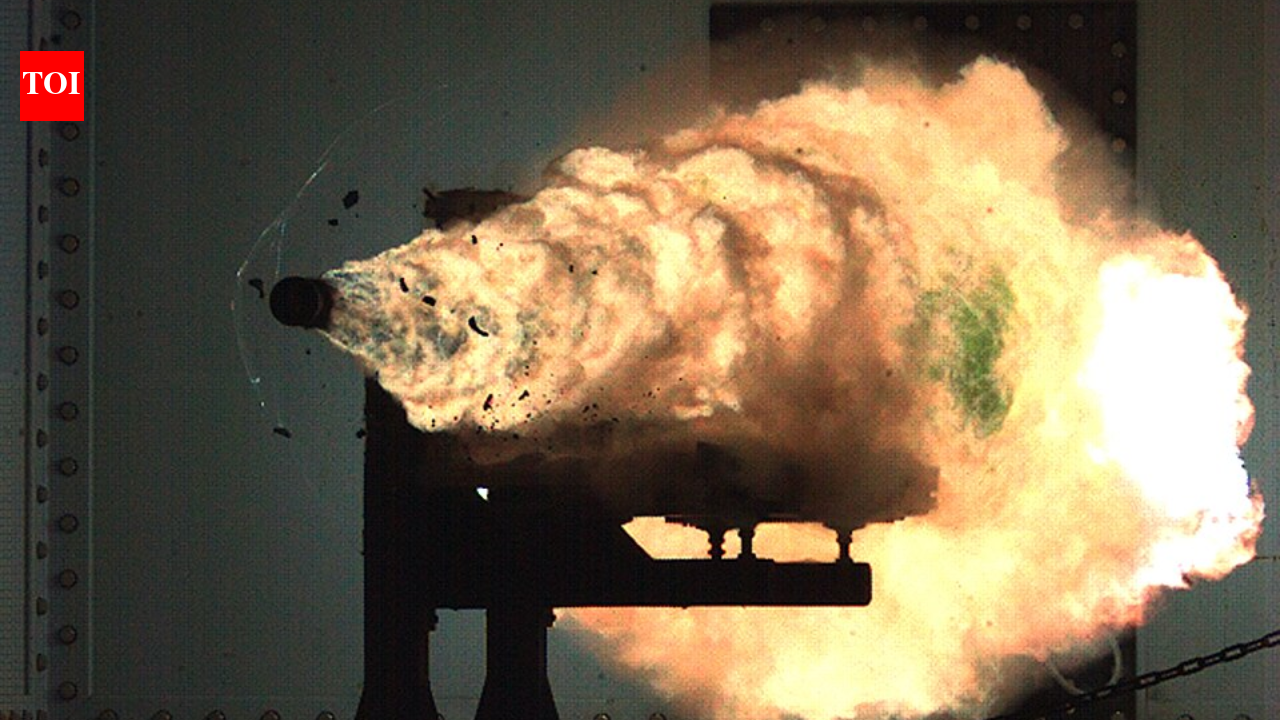
India has officially thrown open its doors to private industry in a critical push to develop its next-generation electromagnetic railgun technology. The Heavy Vehicles Factory (HVF) in Avadi has just issued Expressions of Interest (EOI) for key components of an Electromagnetic Launcher (EML) system, signaling a major leap from laboratory research to industrial-scale production. This move is a clear sign that India is accelerating its ambition to field 'space age' weaponry, aiming for indigenous high-velocity projectile capability. The Defence Research and Development Organisation (DRDO) is at the forefront of this ambitious program, envisioning a 100-megajoule railgun capable of launching 18-kilogram projectiles at blistering speeds exceeding 2,000 meters per second, or Mach 6, potentially reaching ranges of 100 to 400 kilometers. Unlike traditional artillery, these kinetic energy weapon use powerful electrical pulses instead of chemical propellants, offering advantages in logistics and safety while delivering devastating impact. This advanced weapon is being eyed for critical roles in naval strike operations, anti-ship warfare, and air defence, positioning India alongside a select group of nations like the US and China that are actively pursuing similar futuristic technologies. However, the path to operational deployment is fraught with significant technical hurdles, including the immense power generation required, the rapid barrel wear caused by extreme electrical and thermal stress, and the need for robust recoil systems. The current EOI, specifically for barrel assemblies and their associated electrical and mechanical drives, underscore India's commitment to overcoming these challenges through strong industry partnerships, aligning with the 'Atmanirbhar Bharat' initiative for self-reliance. Success here could also pave the way for advancements in related fields, such as Electromagnetic Aircraft Launch System (EMALS), promising a transformative impact on India's defense capabilities in the coming decade.